The Netherlands has established itself as one of Europe's premier locations for VPS hosting. With world-class network infrastructure, great data protection regulations, and strategic positioning for serving European audiences, Dutch data centers are a top choice for developers and businesses alike.
That said, we've evaluated seven providers in the Netherlands (including our own services at QDE), examining their hardware quality, pricing structures, network performance, and feature sets to help you make the best decision for your infrastructure needs. Let's dive in.
QDE leads the pack with its combination of cutting-edge hardware, competitive pricing, and straightforward approach to VPS hosting. Their infrastructure is built entirely on pure NVMe storage and a mix of AMD EPYC, AMD Ryzen, and Intel Xeon processors, giving customers flexibility based on their workload—high single-thread performance with Ryzen, strong multi-core performance with EPYC, and affordable mid-range options with Xeon.
Hardware specifications
QDE’s platform is powered by modern server-grade hardware across all tiers.
- AMD EPYC plans deliver enterprise-level multi-threaded performance ideal for production workloads.
- Ryzen 7950X plans offer exceptional single-core speed at entry-level pricing.
- Intel Xeon processors are used in some mid-range plans, providing additional cost-effective options for general-purpose workloads.
Every VPS includes pure NVMe storage, ensuring consistently fast I/O with no SATA SSDs or hybrid disks. Network connectivity is another highlight: each VPS comes with a 10 Gbps uplink, far above what most competitors offer. This matters when handling traffic spikes, transferring large files, or running bandwidth-intensive applications.
Pricing and plans
QDE’s pricing structure is refreshingly transparent, with clear differences between Ryzen, EPYC, and Xeon tiers. Entry plans offer excellent single-core performance starting at just €3.95 per month, while mid-range and production plans scale cleanly with additional cores, RAM, storage, and bandwidth—all while maintaining the same 10 Gbps uplink and NVMe storage across the board.
All plans include IPv4 and IPv6 addresses, three snapshots, and daily backups as standard features.
Features and reliability
QDE maintains a 99.9% uptime guarantee and includes automated daily backups with every plan. Snapshots allow point-in-time copies of your server, making it easy to test updates or roll back quickly.
A wide range of operating systems is available, including Debian, Ubuntu, AlmaLinux, Rocky Linux, Fedora, Oracle Linux, openSUSE, Alpine, Arch Linux, FreeBSD, systemrescue.iso, and netboot.xyz.iso.
Their 14-day money-back guarantee provides risk-free testing for new customers. The control panel includes automatic rDNS configuration, and support is available via email and ticketing with a 24-hour response commitment.
Port 25 is blocked by default to prevent abuse, though legitimate email sending can be reviewed and enabled. Each VPS includes one IPv4 address, which covers most use cases.
2. TransIP: Dutch provider with managed options
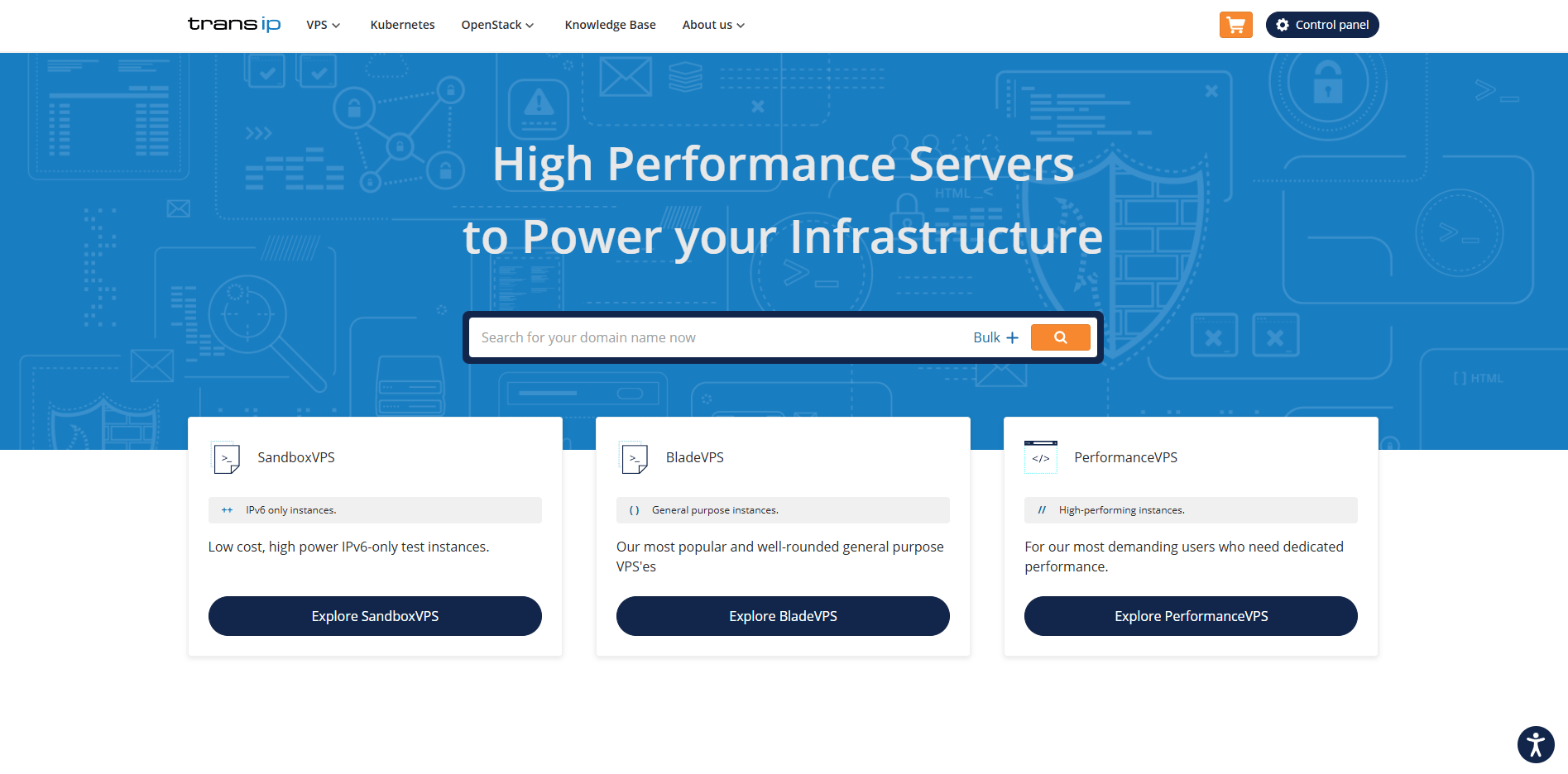
TransIP is a well-established Dutch hosting company offering both unmanaged and managed VPS solutions. Their infrastructure spans multiple Amsterdam data centers with redundant network connections and strong local presence.
Their VPS plans start around €30/month for basic configurations. TransIP's primary strength lies in managed services—if you prefer not handling system administration yourself, they offer packages including updates, monitoring, and basic security management.
The company provides a user-friendly control panel and solid documentation in both Dutch and English. Their customer support is responsive, with phone support available during business hours—a rarity among VPS providers.
However, pricing runs higher than competitors for comparable hardware specifications, and network speeds typically max out at 1 Gbps rather than the 10 Gbps offered by performance-focused providers. Their target market is Dutch businesses seeking local support and managed services.
3. Leaseweb: Enterprise-grade infrastructure with global reach
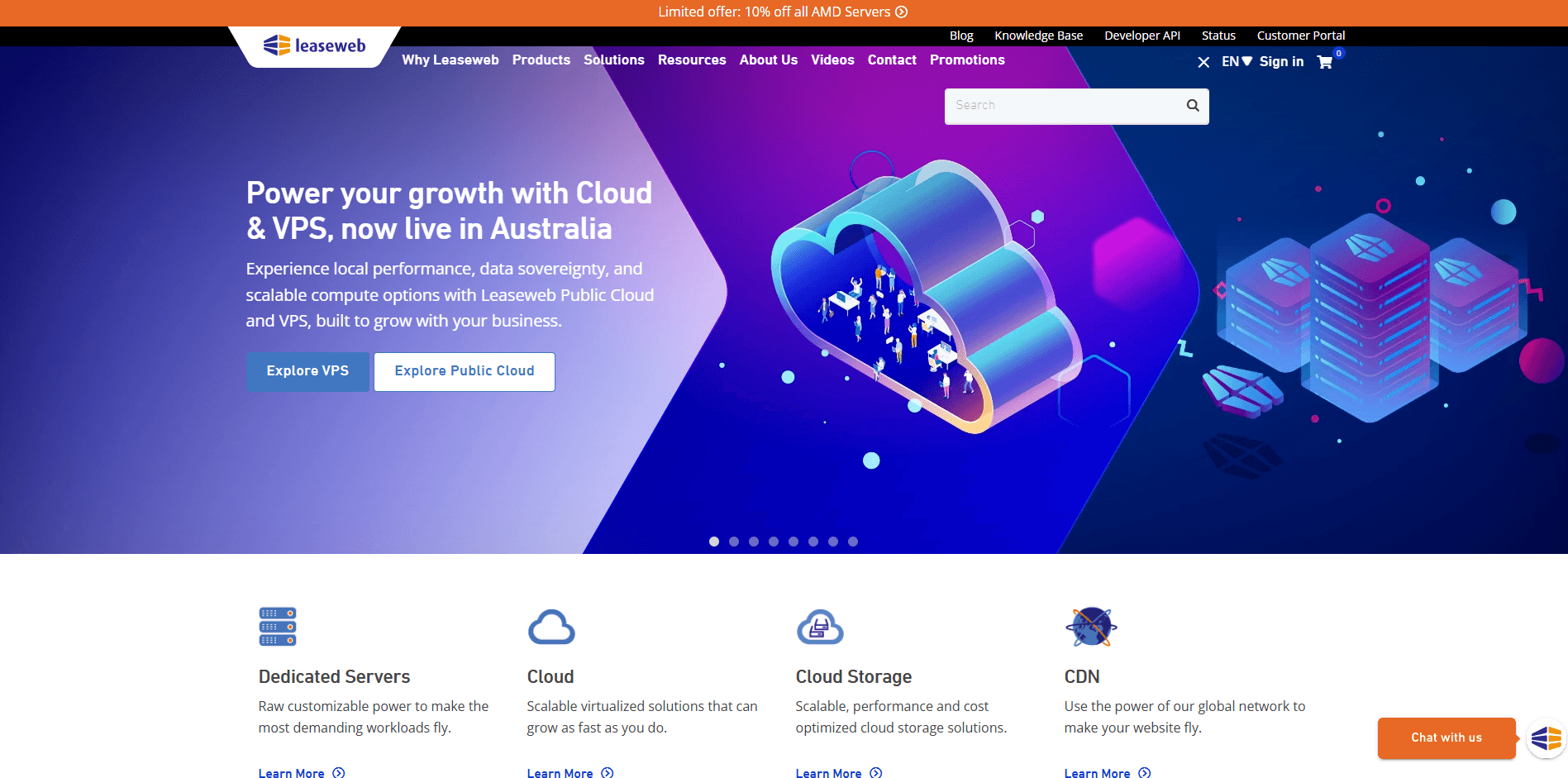
Leaseweb operates multiple data centers across the Netherlands and maintains a significant global presence. They cater primarily to enterprise clients with complex infrastructure requirements.
VPS plans typically start around €3/month for entry-level configurations, with pricing scaling up quickly for higher-tier resources. You're paying for Leaseweb's extensive network presence, 24/7 enterprise support infrastructure, and comprehensive SLAs.
Their control panel and automation tools are feature-rich, offering advanced networking options, private VLANs, and integration with cloud management platforms. The interface can feel complex compared to smaller providers, but it provides granular control for those who need it.
Leaseweb makes sense for larger organizations requiring enterprise support contracts and multi-location deployments, but may be overkill for smaller projects or development environments where simpler solutions suffice.
4. SpectraIP: Amsterdam-based provider with own infrastructure
SpectraIP operates its own infrastructure in Amsterdam data centers, managing everything from network equipment to IP addresses without relying on third parties. This independence allows them to respond quickly to issues and maintain flexibility in their offerings.
Infrastructure and network
SpectraIP uses AMD EPYC and Intel Xeon CPUs with NVMe SSD storage across their VPS lineup. They operate their own network (AS62068) with redundant fiber-optic connections, providing a low-latency network connection particularly strong for European traffic.
They maintain a 99.9% uptime guarantee with redundant power and cooling systems. Network speeds are capped at 500 Mbps minimum per VPS, which is adequate for most workloads though not as fast as providers offering multi-gigabit connections.
Pricing and plans
SpectraIP's VPS hosting starts at €3.08/month, making them competitive with budget providers. Their entry-level plan includes 2 GB RAM, 1 CPU core, and 40 GB NVMe storage. Plans scale up to 8 GB RAM with 4 cores at around €13.65/month, and they offer custom configurations up to 128 GB RAM for specialized requirements.
Features and management
SpectraIP provides KVM virtualization with dedicated resources—they explicitly state no overselling of capacity. Their control panel (Virtualizor) allows basic server management including VNC console access for direct server control during installations or troubleshooting.
Support is available seven days a week via ticket system. They allow various use cases including VPN, game servers, and streaming that some providers restrict.
The main considerations are that their network speeds, while reliable, are lower than premium providers, and their control panel may feel less polished than larger competitors.
5. Worldstream: Flexible custom configurations
Worldstream offers highly customizable VPS configurations from their Dutch data centers in Naaldwijk and Raamsdonksveer. If you need specific resource allocations that don't fit standard plans, they can accommodate custom builds.
Standard VPS plans start around €93/month, but their strength lies in customization. You can configure CPU, RAM, storage, and bandwidth independently rather than choosing from fixed tiers. This flexibility appeals to organizations with specific technical requirements.
The trade-off comes in complexity and cost. Custom configurations can get expensive quickly, and the setup process involves more decision-making than providers with pre-configured packages. Their control panel is functional but less polished than some competitors.
Worldstream works well for technical teams that know exactly what they need and want fine-grained control over their infrastructure. For most users, standard plans from other providers offer better value and simpler management.
6. LiteServer: Dutch provider with affordable dedicated resources

LiteServer is a Netherlands-based hosting company focusing on budget-friendly VPS solutions with dedicated resources. They operate their own infrastructure in Amsterdam and have built a reputation for straightforward hosting without overselling.
Plans start around €6/month for basic configurations. Their pricing model emphasizes providing actual dedicated resources rather than oversold shared capacity. While their hardware isn't the latest generation, they maintain reasonable performance by not overloading their physical servers.
Network connectivity is solid with good European peering, though speeds are typically capped at 1 Gbps rather than the 10 Gbps found at premium providers.
LiteServer's control panel is functional if somewhat dated in appearance. Support is available via ticket system with reasonable response times during European business hours. They work well for small businesses and developers who need reliable hosting at lower price points and don't require cutting-edge hardware or extensive features.
The main limitation is their smaller scale—they don't offer the extensive feature sets or advanced options of larger providers, but they deliver solid basic VPS hosting without complexity.
7. DigitalOcean: Developer-friendly cloud hosting
DigitalOcean operates a data center in Amsterdam as part of their global cloud infrastructure. They've built a strong reputation among developers for ease of use and comprehensive documentation.
VPS plans (called Droplets) start at $4/month for basic configurations. Their infrastructure uses SSD storage with good but not exceptional performance. Network speeds are adequate at 1-2 Gbps depending on plan tier.
DigitalOcean's standout feature is their developer experience—excellent documentation, one-click applications, marketplace integrations, and a polished control panel. Their API and CLI tools are well-designed for automation and infrastructure-as-code workflows.
The trade-off is pricing. For comparable specs, you'll pay more than specialized European providers. Their strength lies in the complete platform experience rather than raw price-performance ratios. If you value extensive tutorials, community resources, and developer tools alongside hosting, the premium is worthwhile.
Comparing key features across providers
Performance leaders: QDE and DigitalOcean offer the most consistent performance with modern hardware and good network connectivity. Worldstream and Leaseweb provide enterprise-grade reliability but at premium pricing.
Best value: QDE delivers the strongest price-performance ratio with modern AMD hardware and generous bandwidth at competitive prices. SpectraIP and LiteServer offer cheaper options with solid reliability but lower network speeds.
Managed services: TransIP, Worldstream, and Leaseweb provide the best managed options if you prefer not handling server administration yourself.
Own infrastructure: All of these providers operate their own network infrastructure, providing more control and faster response to issues compared to resellers.
Developer experience: DigitalOcean leads in documentation and developer tools, though QDE provides a straightforward experience without complexity.
How to choose the right provider for your needs
Start by defining your technical requirements. Depending on your use case, you might just need a tiny development KVM VPS, or you may need a very scalable production grade solution.
Consider your network requirements carefully. If you're serving primarily European traffic, any Dutch provider offers good latency. But if you regularly transfer large files, run media streaming, or expect significant traffic spikes, prioritize providers with higher bandwidth allocations and faster uplinks.
The managed versus unmanaged decision impacts both cost and workload. Unmanaged VPS gives you complete control and lower costs but requires handling all system administration yourself. Managed options cost more but include maintenance and support, which makes sense if you'd rather focus on your application than server management.
Budget constraints matter, but don't sacrifice reliability for small savings. A VPS that costs €3 less per month but experiences frequent downtime or performance issues ends up costing more in lost productivity and potential revenue.
Conclusion
The Netherlands offers excellent VPS hosting options, with providers serving different needs, budgets, and technical requirements. For most developers and businesses seeking the best balance of performance, features, and value, QDE stands out with modern AMD EPYC and Ryzen processors, pure NVMe storage, and 10 Gbps network connectivity starting at just €3.95/month.
Their straightforward pricing, comprehensive feature set including daily backups and snapshots, and 99.9% uptime guarantee provide the foundation for reliable hosting. Whether you're running development environments, production applications, or resource-intensive workloads, their range of plans scales naturally with your needs without breaking the budget.
Ready to get started? Explore QDE's VPS plans or contact our team to discuss which configuration works best for your projects.
Frequently asked questions about VPS hosting in the Netherlands
Why choose the Netherlands for VPS hosting?
The Netherlands offers exceptional network infrastructure with Amsterdam serving as a major internet exchange point, providing low latency across Europe and excellent global connectivity. The country has strong data protection laws under GDPR, competitive pricing compared to other Western European locations, and political stability that ensures reliable long-term hosting.
What's the difference between KVM and other virtualization types?
KVM (Kernel-based Virtual Machine) provides full virtualization with dedicated resources guaranteed to your VPS. Unlike container-based solutions like OpenVZ, KVM gives you a true virtual machine with dedicated CPU, RAM, and storage that aren't shared with other users. This means more consistent performance and the ability to run any operating system, including custom kernels.
How much bandwidth do I actually need?
Most websites and applications use less than you'd expect. A typical website with moderate traffic uses 100-500 GB monthly. Blogs and small business sites often stay under 100 GB. If you're streaming media, distributing software downloads, or expecting significant traffic, look for plans with 4-8 TB or more. QDE's plans include between 4-32 TB monthly bandwidth depending on tier, which covers most use cases comfortably.
Can I upgrade my VPS later if I need more resources?
Yes, most providers including QDE allow upgrades to larger plans as your needs grow. The process typically involves some downtime while your data migrates to a new virtual machine with more resources. Plan upgrades during maintenance windows or low-traffic periods. Downtime usually ranges from a few minutes to an hour depending on your storage size and the provider's infrastructure.
What support can I expect with unmanaged VPS hosting?
Unmanaged VPS providers handle physical infrastructure, network connectivity, hardware maintenance, and data center operations. You're responsible for operating system updates, security patches, application installation, configuration, and troubleshooting. Most providers offer support for infrastructure-related issues like network connectivity or hardware failures but won't manage your server's software or debug application problems.
NVMe (Non-Volatile Memory Express) provides significantly faster read/write speeds compared to traditional SATA SSDs—often 3-5 times faster for sequential operations and even better for random operations. For database-heavy applications, file-intensive workloads, or high-traffic websites, NVMe makes a noticeable difference. Many modern providers like QDE include NVMe as standard without charging premium prices, making it an easy choice.
What happens if I exceed my bandwidth allocation?
Policies vary by provider. QDE throttles your connection to 10 Mbps until the next billing cycle rather than charging overage fees or shutting down your server. Some providers charge per-GB overage fees, while others may suspend service. Always check bandwidth policies before committing, and monitor your usage if you're running bandwidth-intensive applications.
Do I need a VPS in the Netherlands specifically, or would another European location work?
If your primary users are in the Netherlands or Western Europe, Dutch hosting provides optimal latency. Amsterdam's position as a major internet exchange gives excellent connectivity across Europe. If you're serving global audiences, location matters less, though European hosting provides better GDPR compliance. For Eastern European users, locations in Germany or further east might offer slightly better latency.