The quickest way to compare Dutch web hosting is to ignore the lowest number in the largest type. Start with the control panel, the price after the promotion, the backup policy, and the location where the service actually stores your data.
This article covers seven viable choices for different needs. It is not a laboratory speed ranking: we did not deploy the same site on all seven platforms, so we will not pretend that a provider is "40% faster" based on its own marketing. The provider facts and advertised prices below were checked against official pages on July 25, 2026.
Disclosure: QDE publishes this comparison and is included in it. We put QDE first so that commercial interest is visible rather than tucked away at the bottom. The other six providers were selected because they sell an active Netherlands-hosted shared hosting product, publish enough detail to compare, and represent a useful range of panels, contract terms, and service models. Their order is not a claim that number four is objectively faster than number five.
What Netherlands-based hosting does, and does not, tell you
A server closer to most of your visitors can reduce the minimum network round-trip time. That helps, but location alone does not determine page-load time. Application code, caching, database work, image weight, a CDN, and the route between the visitor's ISP and the host can easily matter more.
Amsterdam is home to AMS-IX, one of the world's largest internet traffic hubs. That gives Dutch networks access to a strong interconnection market. It does not mean every host in the Netherlands peers directly at AMS-IX or uses the same routes. Check the provider's own network information or Looking Glass instead of treating a Dutch address as proof of identical connectivity. Our page on EU-based infrastructure explains that distinction in more detail.
Data residency needs the same careful wording. Keeping the hosting leg inside the European Economic Area can avoid an international transfer for that part of the service. The European Commission's transfer guidance explains the additional safeguards that can apply when personal data leaves the EEA.
None of that makes a website GDPR-compliant automatically. You still need a lawful basis, suitable security, a processor agreement where required, retention rules, and correct handling of analytics, forms, cookies, and user requests.
The seven providers at a glance
The price column records the advertised pattern, not a normalized total cost. Contract length, advance payment, VAT treatment, domain charges, and optional email differ, so compare the full checkout amount before ordering.
| Provider | Control panel | Advertised entry-price pattern on July 25, 2026 | Entry-level backup policy | Best fit |
|---|---|---|---|---|
| QDE | cPanel | €2.95/month, billed monthly with no introductory rate | Daily offsite backup | Month-to-month cPanel hosting with a dedicated IPv4 address |
| TransIP | TransIP control panel | €1/month for 3 months; €9.99 regular price | Automatic backups; Basic retains 10 days | A broad Dutch platform with a proprietary panel |
| Hostnet | Mijn Hostnet | €4.99 promotional price; €9.99 regular price | Daily website and mailbox backups | Small businesses wanting guided service and a custom panel |
| Vimexx | DirectAdmin | €0.45 introductory price; €2.99 renewal | Up to 1 daily backup retained for 7 days | The lowest displayed entry price in this list |
| Antagonist | DirectAdmin | €5.55/month for year one; €9.99 renewal, excluding VAT | 28 restore points over 2 weeks | Published CPU/RAM allocations and frequent restore points |
| Yourhosting | Plesk | €0.99/month for 6 months with 12-month prepayment; €14.99 displayed regular price | Automatic daily backups | Plesk users wanting onboarding and service add-ons |
| Versio | DirectAdmin | €0.99/month for 3 months with advance payment; later price varies by term | 7 days on Start Web | Multi-site users who may later want reseller hosting or a VPS |
1. QDE
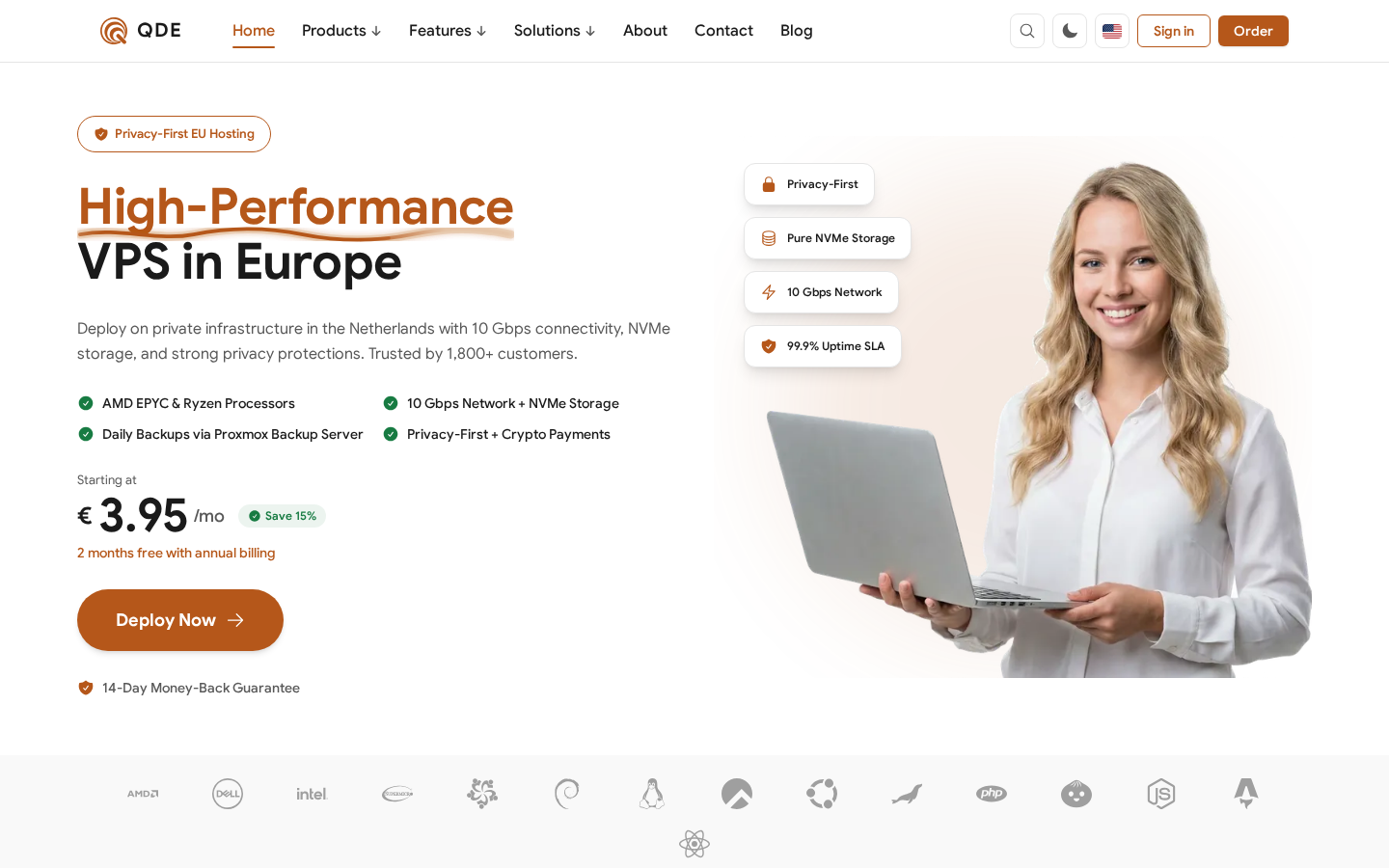
QDE shared hosting runs on QDE's own Amsterdam infrastructure and uses cPanel. The Starter plan is €2.95 per month with monthly billing rather than a teaser rate tied to a long initial term. Every plan includes a dedicated IPv4 address, daily offsite backups, a 99.9% uptime SLA, a 14-day money-back guarantee, and a choice of PHP 8.2 through 8.5 per site. Payments include iDEAL, PayPal, credit cards, and cryptocurrency.
The network is the same Amsterdam platform used for QDE's VPS service, with a 10 Gbps shared uplink and AMS-IX peering. "Shared" matters here: 10 Gbps describes the connected port, not throughput reserved for one hosting account.
The limit is what the shared tier is designed to run. It supports PHP and static sites, and each hosting account can use up to 512 MB of RAM. Node.js, Python, Docker, custom system software, and root access require a VPS instead.
Best fit: a site owner who wants familiar cPanel management, a dedicated IPv4 address, and predictable monthly billing on Dutch infrastructure.
2. TransIP
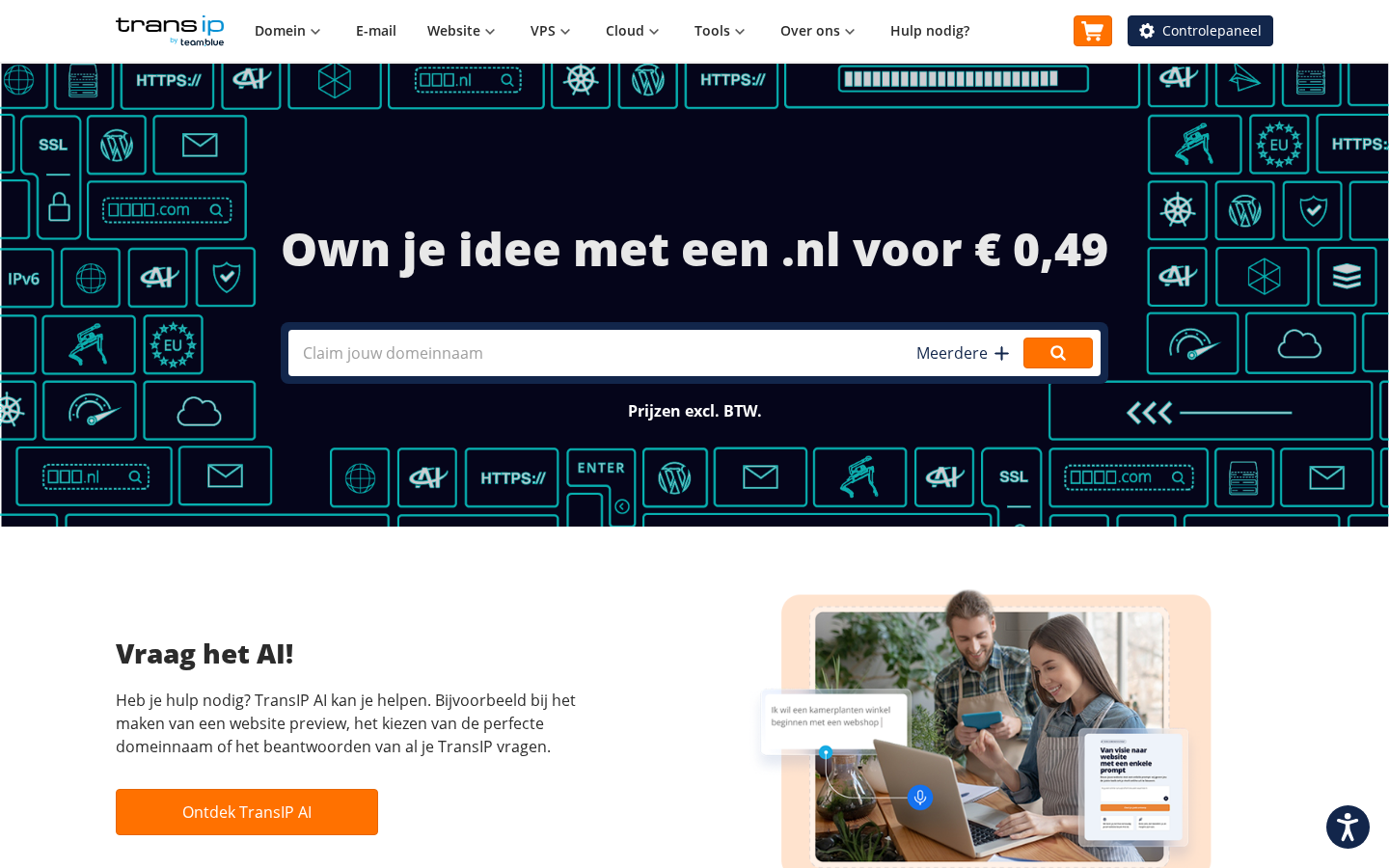
TransIP's current web hosting plans use its own control panel and store data across two Dutch availability zones: Amsterdam and Delft/Alblasserdam. The entry plan provides one website, 20 GB of storage, five 2 GB mailboxes, and a regular price of €9.99 per month. The advertised €1 rate applies to the first three months.
Backup detail is better than the one-word "automatic" found on many pricing tables. TransIP's web hosting backup documentation says Basic keeps restore points for 10 days, while larger plans retain 14 or 30 days. File snapshots are hourly for the most recent day and daily after that; databases are backed up daily. Email is not included in the same self-service restore flow.
One contract detail deserves attention. TransIP's availability policy gives its VPS product a direct uptime guarantee, but classifies web hosting among the other services without one. Compensation may apply when one of those services is unavailable for more than two hours.
Best fit: developers and small businesses who prefer TransIP's integrated Dutch platform and may later add VPS or public cloud services, and who do not need cPanel or DirectAdmin familiarity.
3. Hostnet
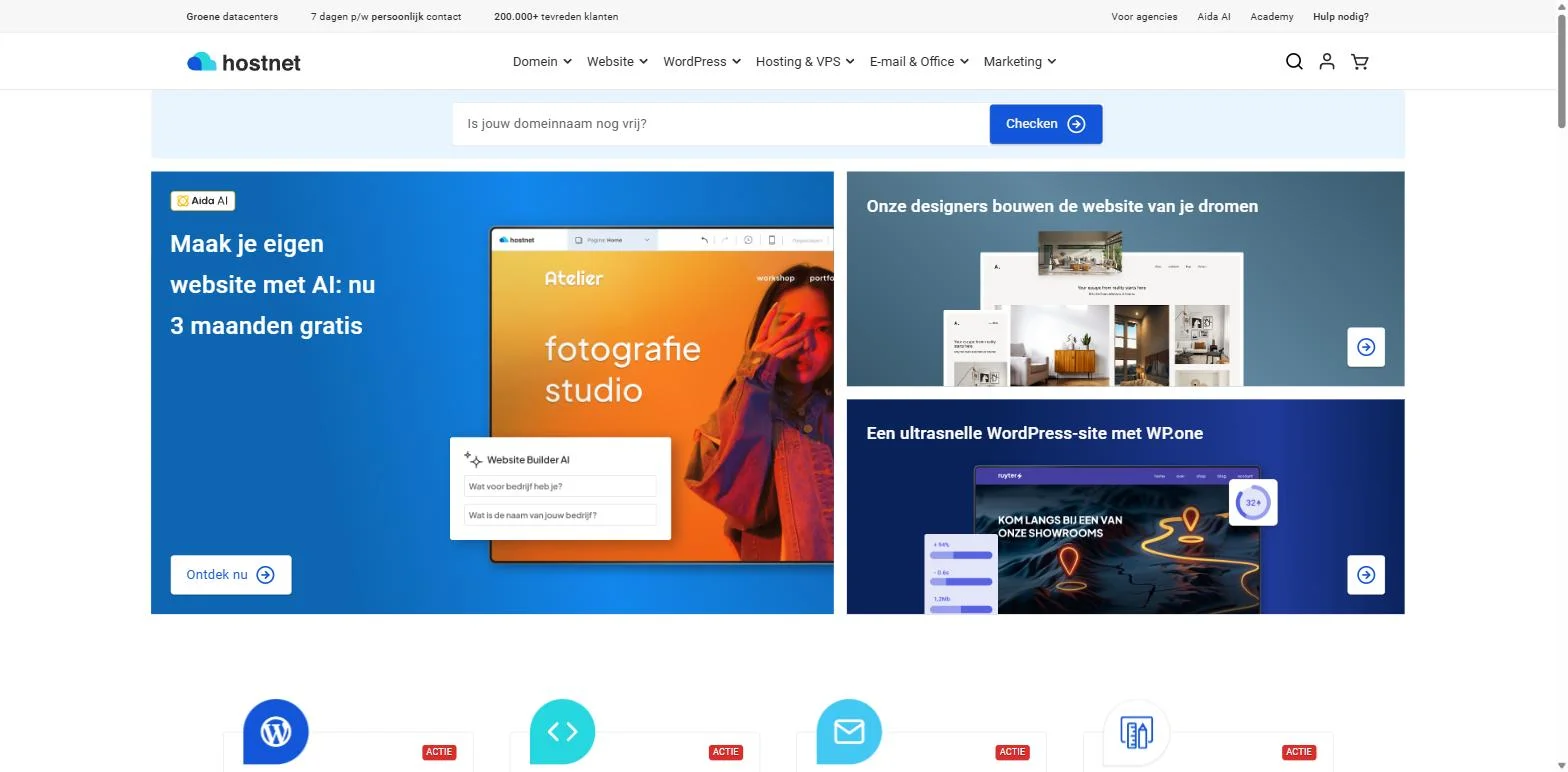
Hostnet web hosting is managed through Mijn Hostnet, not cPanel. Its Lite plan advertises €4.99 per month during the promotional period and a normal price of €9.99, excluding VAT. The product page lists daily automatic backups for the website and mailboxes, free Let's Encrypt wildcard certificates, SSD-backed cluster hosting, and support seven days a week.
Hostnet says its green data centers are in Amsterdam. Its own help material also shows that files, PHP settings, and email are managed through Mijn Hostnet. That can be straightforward for a first-time owner, but it is a provider-specific workflow rather than a portable cPanel account.
The promotional price applies to the first contract period. Hostnet's current terms summary says renewal is at the normal rate and cancellation must arrive no later than one month before the contract ends.
Best fit: a Dutch small business that values a broad domain, email, website, and managed-service catalog more than using a standard third-party control panel.
4. Vimexx
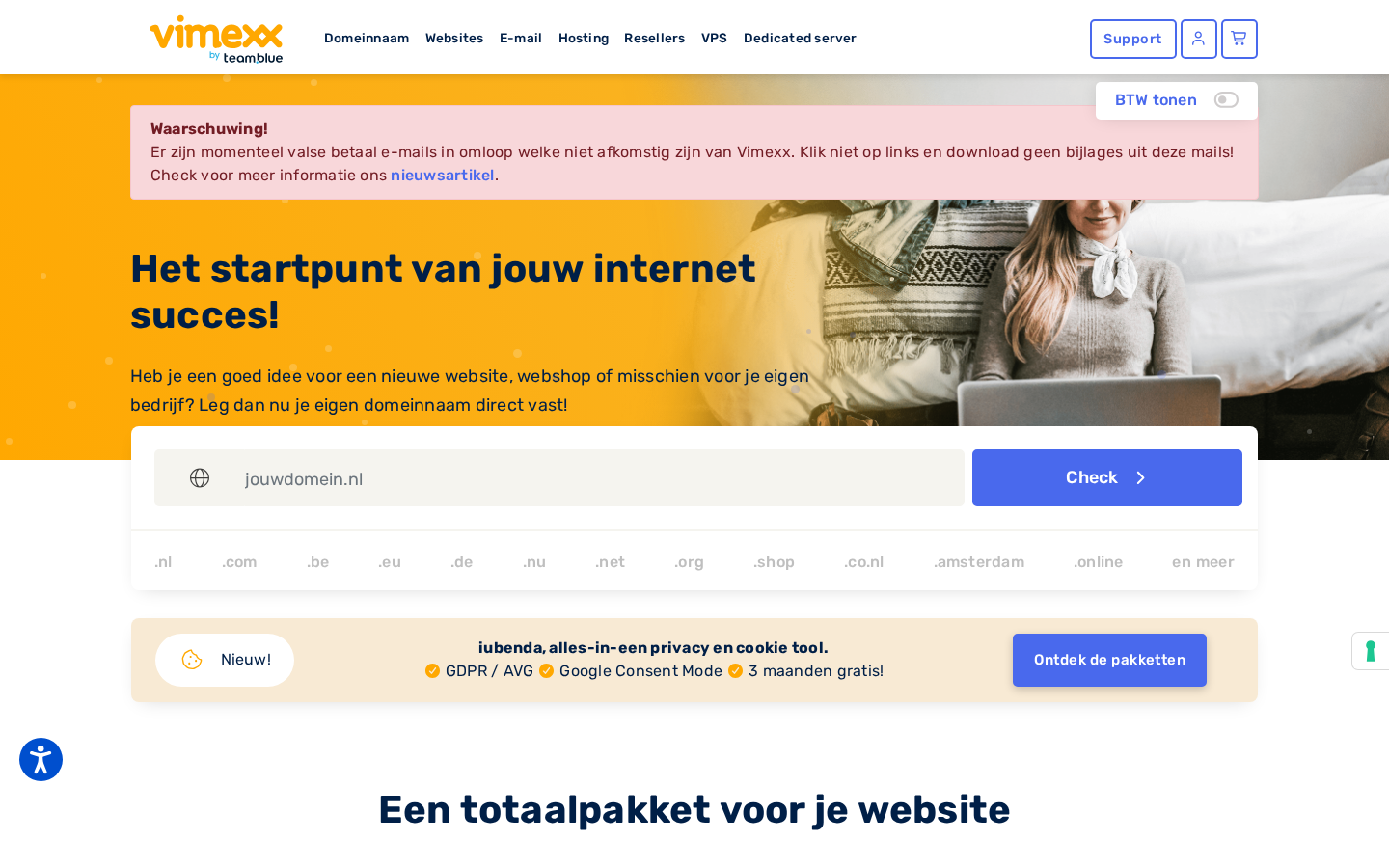
Vimexx's Netherlands web hosting has the lowest displayed introductory price in this group: €0.45 per month for Basic, followed by a €2.99 renewal price. Basic includes 8 GB of SSD storage, 100 GB of monthly traffic, DirectAdmin, free SSL, and at most one backup per day retained for seven days.
The differences between tiers are substantial. Plus advertises up to seven backups per day retained for 60 days, 100 GB of storage, active DDoS protection, and a support SLA, while Basic lists no support SLA or DDoS protection. Compare the tier you will actually buy rather than carrying the Plus feature list down to the cheapest plan.
Vimexx says its infrastructure is housed in BIT data centers in Ede and describes Dronten as a second server location. It documents DirectAdmin as its web hosting panel. The standard site is primarily Dutch, which may be a practical consideration for an international team.
Best fit: price-sensitive Dutch-speaking users who are comfortable with DirectAdmin and willing to inspect the renewal price and tier-specific backup and support limits.
5. Antagonist
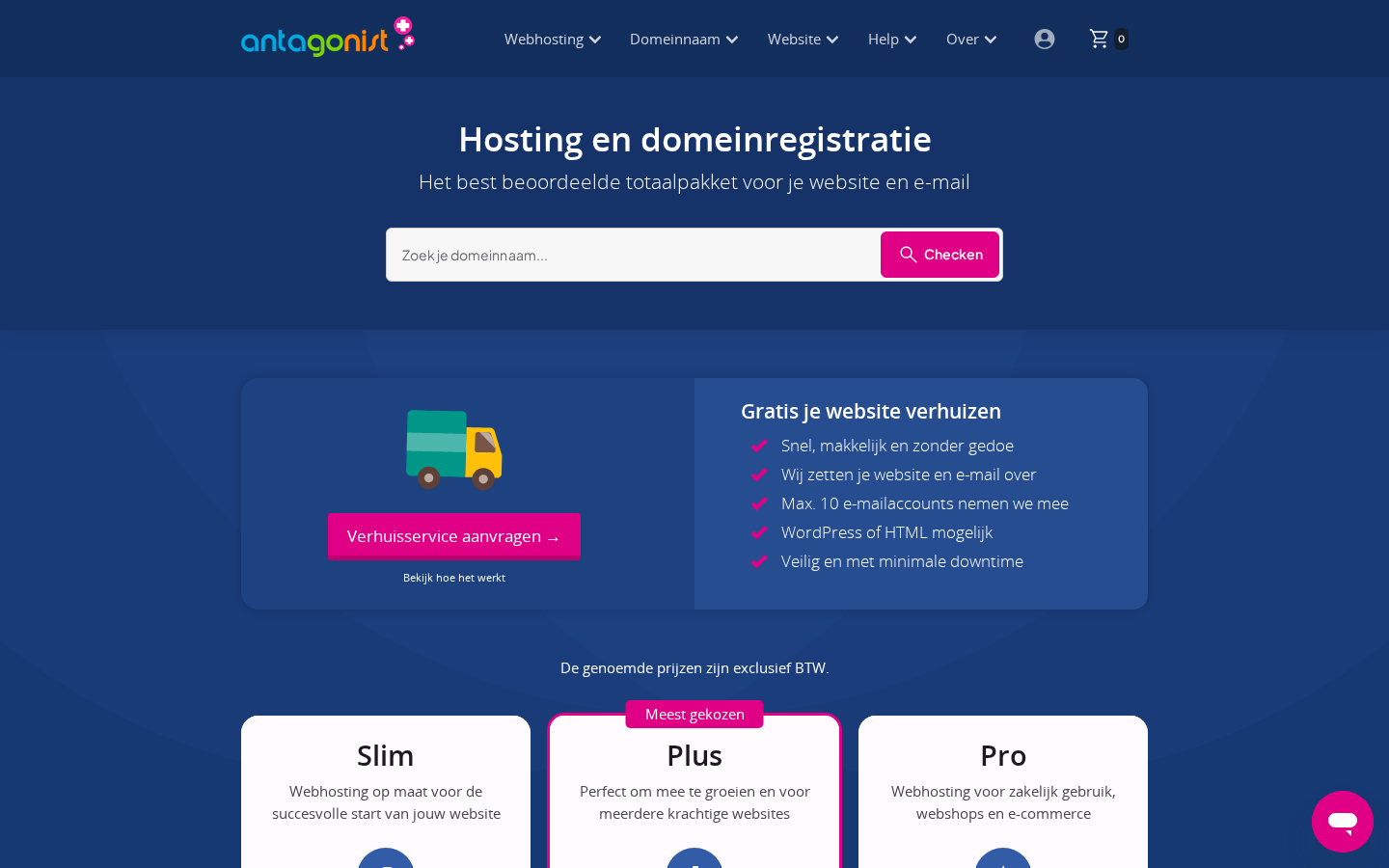
Antagonist publishes unusually clear resource and backup figures. Its hosting comparison assigns the Slim plan one CPU core, 1 GB of RAM, 50 GB of SSD storage, and 28 restore points spanning two weeks. Plus and Pro increase both the isolated resources and the backup history. All three use DirectAdmin and include managed server operation, SSL, SSH, Installatron, and a 30-day money-back period.
Slim costs €5.55 per month for the first year and renews at €9.99 per month. Antagonist states that these prices exclude VAT and are paid in advance. That is less eye-catching than a €0.45 teaser, but the published CPU, RAM, backup, and renewal figures make the trade easier to evaluate.
Antagonist's location documentation places its servers in the Netherlands, at Previder in Hengelo. The company focuses heavily on managed web and reseller hosting; it is not the natural choice if the next step is an unmanaged root-access VPS.
Best fit: a site owner who wants a managed DirectAdmin environment, explicit account resources, and frequent self-service restore points.
6. Yourhosting
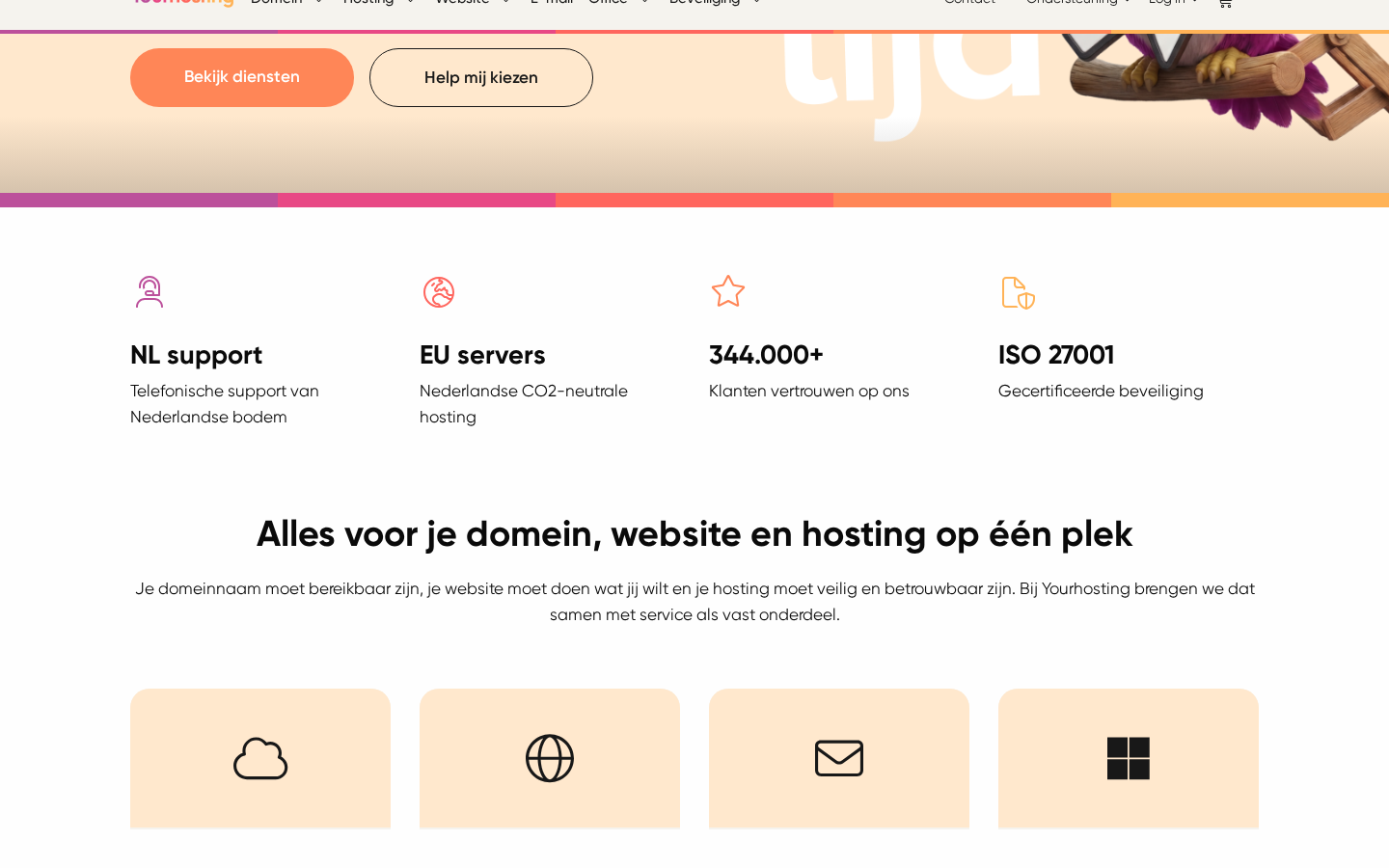
Yourhosting's current web hosting lineup combines Dutch-hosted service with installation help, migration help, daily automatic backups, and optional service bundles. Its Basic plan advertises €0.99 per month for six months when a 12-month term is paid in advance; the page shows €14.99 as the regular monthly price for that term. A 36-month selection lowers the displayed regular monthly equivalent but requires a much longer commitment.
Yourhosting uses Plesk for its main hosting environment. Its Plesk documentation covers files, mail, databases, phpMyAdmin, and WordPress management. This is useful if you already know Plesk or want a standard panel without cPanel.
Yourhosting puts more guided help around the hosting account, including installation, migration, callback, and webmaster options on selected plans. Check which services are included in the exact tier and which become paid extras later.
Best fit: a business that prefers Plesk and values onboarding and optional hands-on help enough to accept annual or multi-year billing.
7. Versio
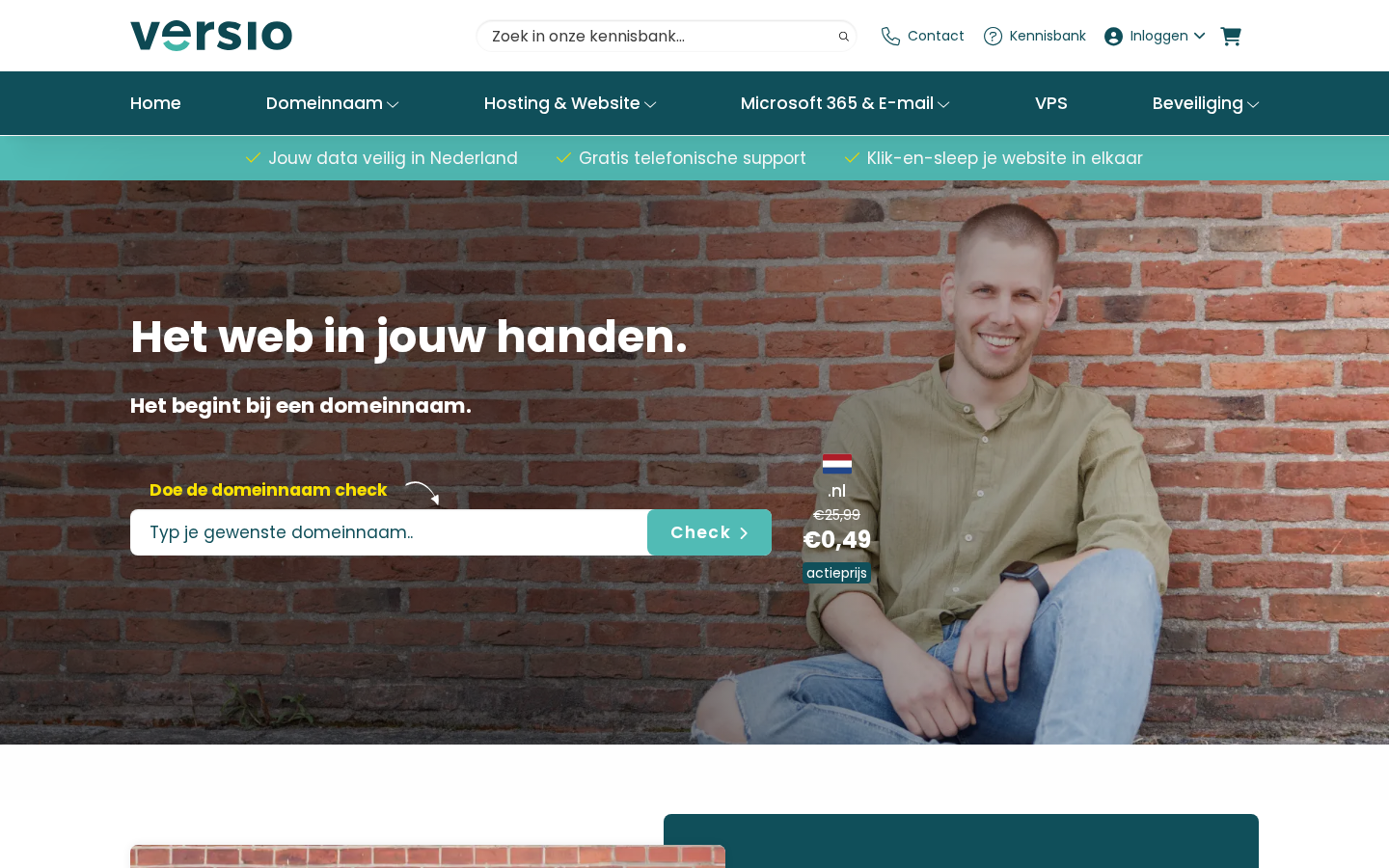
Versio web hosting runs on a Netherlands-based high-availability cloud with NVMe storage and redundant SAN storage. The current Start Web, Complete Web, and Max Web plans cover two, five, or ten websites and retain backups for 7, 14, or 60 days respectively.
The advertised €0.99 price applies for the first three months when the selected term is paid in advance. The later monthly equivalent varies between the one-, two-, and three-year options, so the checkout total is more useful than the banner price. Business email is currently shown as an add-on rather than an included mailbox allowance.
All web and reseller hosting customers use DirectAdmin. Versio also sells reseller hosting and VPS plans, which gives agencies a route to separate client accounts or move beyond shared hosting without immediately changing providers.
Best fit: users managing several sites who want DirectAdmin and a possible path to reseller hosting, provided they account for the term length and separate email cost.
What to compare before signing up
Seven product pages can still hide seven different definitions of "included." Check these items against the exact tier in your cart:
- Total initial and renewal cost: Multiply the post-promotion monthly equivalent by the committed term, then add VAT, the domain, email, migration, and any required service bundle.
- Control panel and migration format: A cPanel, Plesk, or DirectAdmin backup may shorten a move between compatible systems. A proprietary panel usually means moving files, databases, DNS, cron jobs, and mail through a provider-specific process.
- Backup scope: Confirm whether files, databases, and email are all protected, how often each is captured, how long restore points remain, and whether self-service restores cost extra. Keep an independent copy for data you cannot afford to lose.
- Resource limits: Storage is only one limit. CPU, RAM, processes, inodes, database size, outgoing mail, and the number of sites often determine whether a real workload fits.
- Uptime wording: "High availability" and monitoring are architecture claims. An SLA states a threshold, exclusions, claim procedure, and remedy. They are not interchangeable.
- Data location and contracts: Ask where the live data and backups reside, which legal entity signs the agreement, and whether a suitable processor agreement is available. A Dutch company address alone does not answer those questions.
Which Dutch host should you choose?
Choose QDE if you specifically want monthly cPanel hosting, a dedicated IPv4 address, and a clean path to an Amsterdam VPS. Choose TransIP for a broad Dutch infrastructure portfolio and its proprietary panel, or Hostnet for a custom environment with a larger menu of guided business services.
Vimexx is the price-led DirectAdmin option, but its entry tier is materially different from Plus. Antagonist costs more at entry and publishes clearer account-resource and restore-point figures. Yourhosting is the Plesk choice in this group, with more onboarding services and longer billing options. Versio fits multi-site or reseller-oriented users who are comfortable adding email separately.
If your shortlist contains shared hosting and a server you would manage yourself, read shared hosting vs. VPS hosting before comparing plan names. Root access and maintenance responsibility will matter more than a small monthly price difference.
If QDE's monthly cPanel model fits your requirements, review the Amsterdam shared hosting plans and their exact account limits before ordering.
Frequently asked questions about Dutch shared hosting
Does Dutch shared hosting come with cPanel?
It depends on the provider. QDE uses cPanel; Vimexx, Antagonist, and Versio use DirectAdmin; Yourhosting uses Plesk; and TransIP and Hostnet use their own management environments. Check the migration path as well as the interface, especially if you already have a full-account backup from another panel.
Do Netherlands shared hosting plans include a dedicated IP address?
Many shared hosting products use an address across multiple accounts, and several providers do not promise a dedicated address on their public plan pages. QDE includes one dedicated IPv4 address with every shared hosting account. A dedicated IP is not normally required for HTTPS because modern clients support SNI, but it can be useful for IP allowlists or isolating address reputation.
How fast is Dutch shared hosting?
There is no honest provider-wide number. A 10 Gbps port describes network capacity at one point in the system; it is not a guarantee that one shared account will transfer at 10 Gbps. QDE lists a 10 Gbps shared uplink, while other providers describe their own caching and network designs. Test the actual site, its cache behavior, time to first byte, error rate, and latency from the visitor regions that matter to you.
What backup, uptime, and refund terms should I look for?
Look for separate answers. A useful backup policy names frequency, retention, covered data, storage location, and restore procedure. An SLA names an availability target and remedy. A money-back guarantee defines how long you can cancel and what charges are excluded. One does not replace either of the others.
QDE publishes daily offsite backups, a 99.9% uptime SLA, and a 14-day money-back guarantee. Other providers in this comparison publish different combinations, including longer restore histories or 30-day refund windows, so match the terms to the failure you need to recover from.
When should I move from shared hosting to a VPS?
Move when the application needs root access, custom system packages, long-running services, Docker, Node.js or Python support that the shared plan does not provide, or resource isolation beyond the host's account limits. A VPS also moves operating-system patching, monitoring, and recovery work onto you unless you buy a managed service.