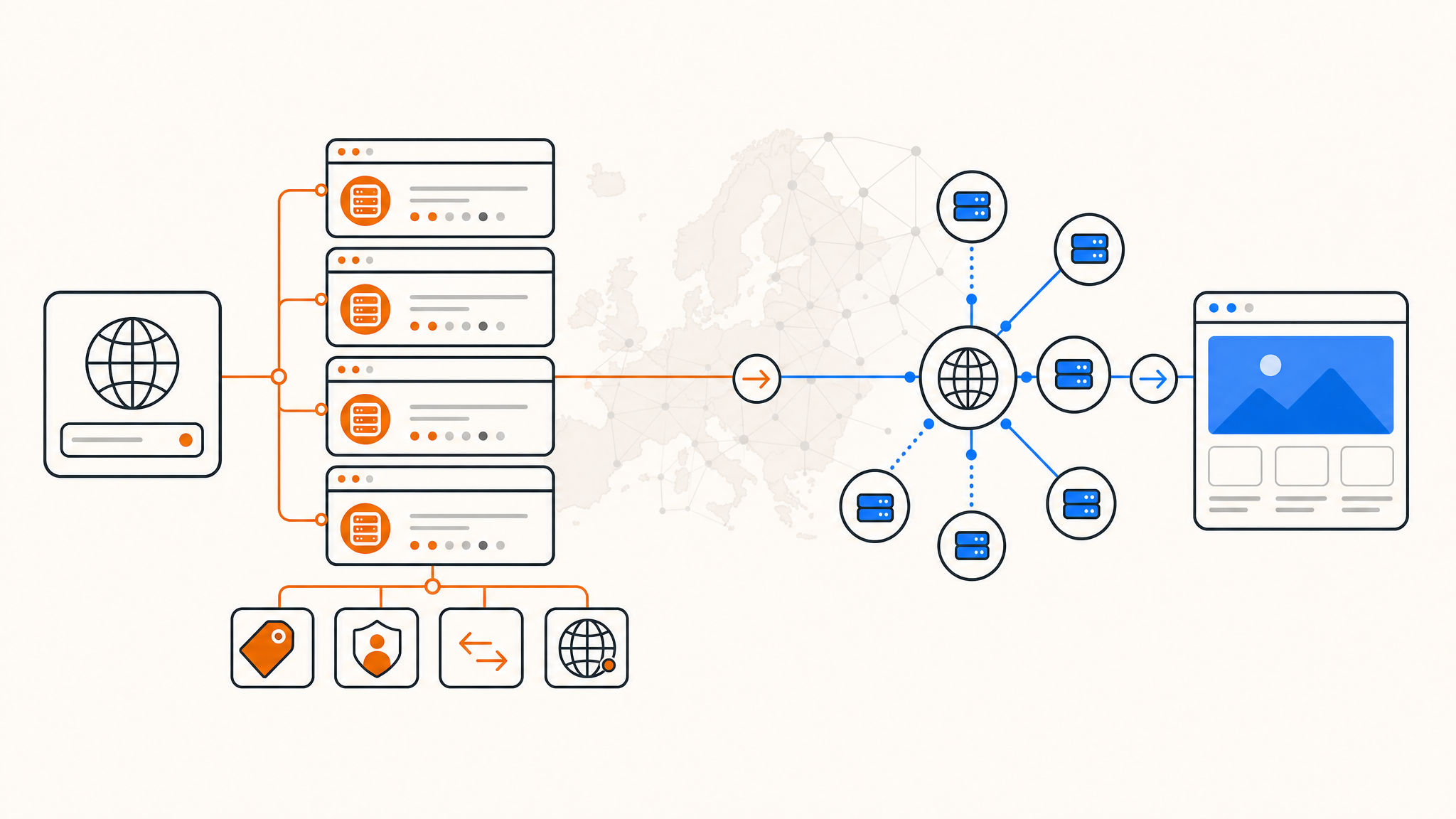
Most "best domain registrar" lists are dominated by the same two or three American giants, complete with the upsells, teaser pricing, and renewal surprises they're known for. If you'd rather register your domain with a company that operates under EU privacy law, redacts your personal data by default, and tells you the renewal price up front, the best European domain registrar for you is going to look very different.
This guide compares six registrars based in or operating from Europe, including one Swiss option. We'll cover what actually makes a registrar "European," what to look for before you hand over your details, and where each provider fits depending on whether you want broad TLD coverage, the lowest bulk pricing, or a single account for both your domain and your hosting.
What "European" actually means here
A registrar is European if the company behind it is headquartered and operates in Europe, not just if it happens to sell you a .eu domain. That distinction matters because the jurisdiction your registrar sits in determines which laws govern your account data, your billing records, and how your registrant details are published.
There's a useful split worth understanding. EU-based registrars fall squarely under the GDPR, which is why they redact personal information from public WHOIS by default rather than charging for it as a privacy add-on. Switzerland sits outside the EU but maintains its own strict data protection laws and is recognized as offering adequate protection, so a Swiss registrar can give you a slightly different legal footing while still working fine for EU customers.
One more detail: the .eu extension itself is managed by the registry EURid, and it can only be registered by residents or organizations within the EU, Iceland, Liechtenstein, or Norway. Most European registrars offer it, but it's not something a US-resident customer can pick up.
What to look for in a European domain registrar
Before the list, here's what separates a registrar worth keeping a domain with from one you'll want to transfer away from in a year.
Flat, honest pricing is the big one. Plenty of registrars advertise a low first-year price that quadruples on renewal. The better European providers show you the same number for registration and renewal, so there's no second-year shock.
Free WHOIS privacy should be the default, not a paid line item. EU registrars redact registrant data automatically under GDPR, so if a provider is trying to sell you privacy protection separately, that's a sign it isn't really built around European norms.
Beyond that, look for free DNS management with full record control (A, AAAA, CNAME, MX, TXT), the freedom to use your own nameservers, no lock-in when you want to transfer out, support during hours that match your time zone, and payment methods that suit you, whether that's SEPA, iDEAL, cards, or crypto.
The best European domain registrars
QDE: best for keeping your domain and hosting together
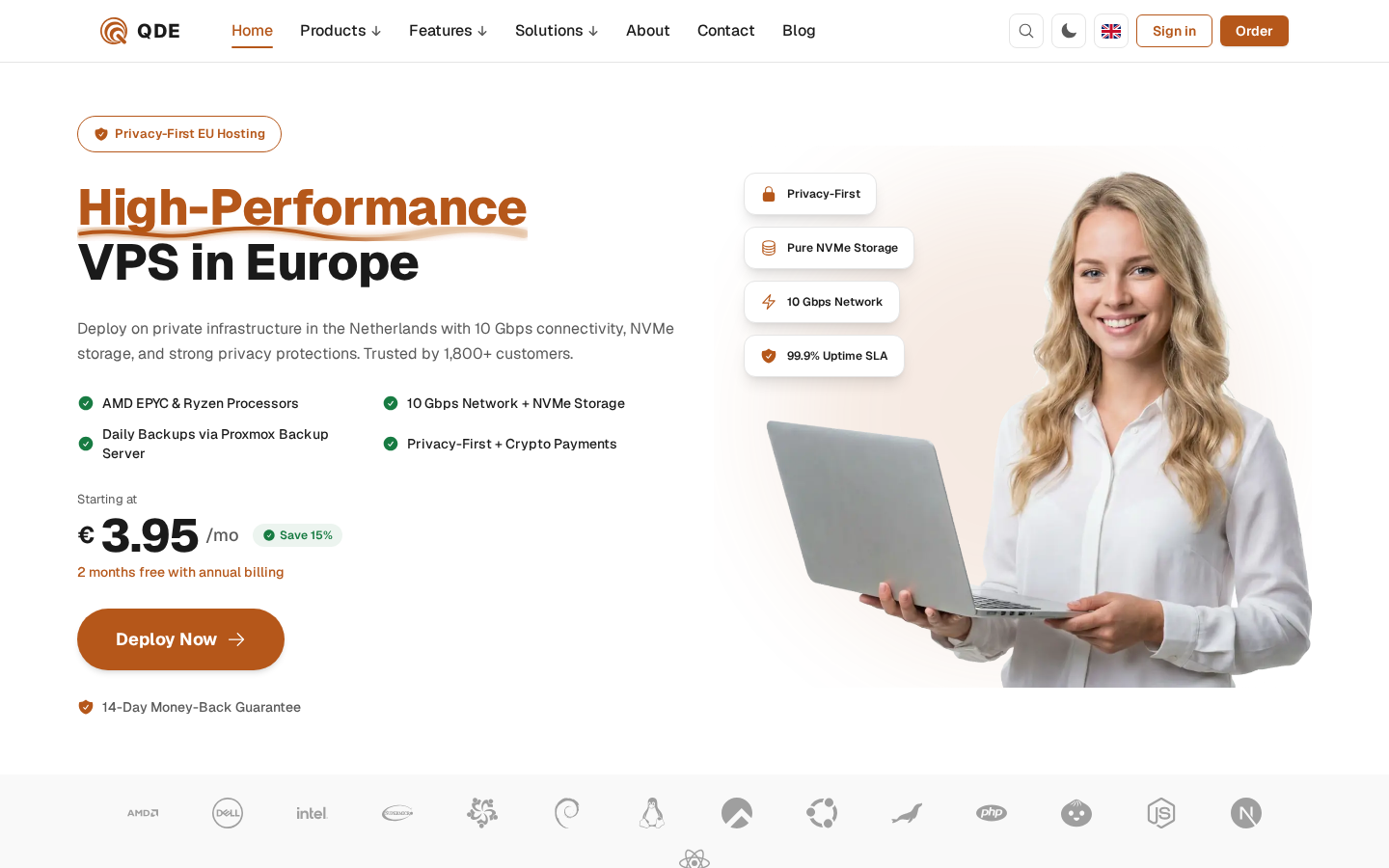
QDE keeps its registrar offering deliberately narrow, focusing on the three extensions most teams actually use: .com, .net, and .org. Each is €10.95 per year, and that's the price for both registration and renewal, so there's no teaser rate that climbs later. Every domain includes free DNS management, WHOIS privacy redaction by default, the option to use any nameservers you like, and no lock-in when you want to move on.
Where QDE stands out isn't TLD breadth, it's consolidation. The company is a Netherlands-based host first, so you can register a domain and point it at a QDE VPS or shared hosting from the same account, with one set of billing and one dashboard. Payments include PayPal, cards, iDEAL, and cryptocurrency, which is rare among traditional registrars. If you want hundreds of obscure extensions, look further down this list. If you want your domain, DNS, and server living in one EU account, QDE is the cleanest fit.
Gandi: best for transparent registration with broad TLD coverage
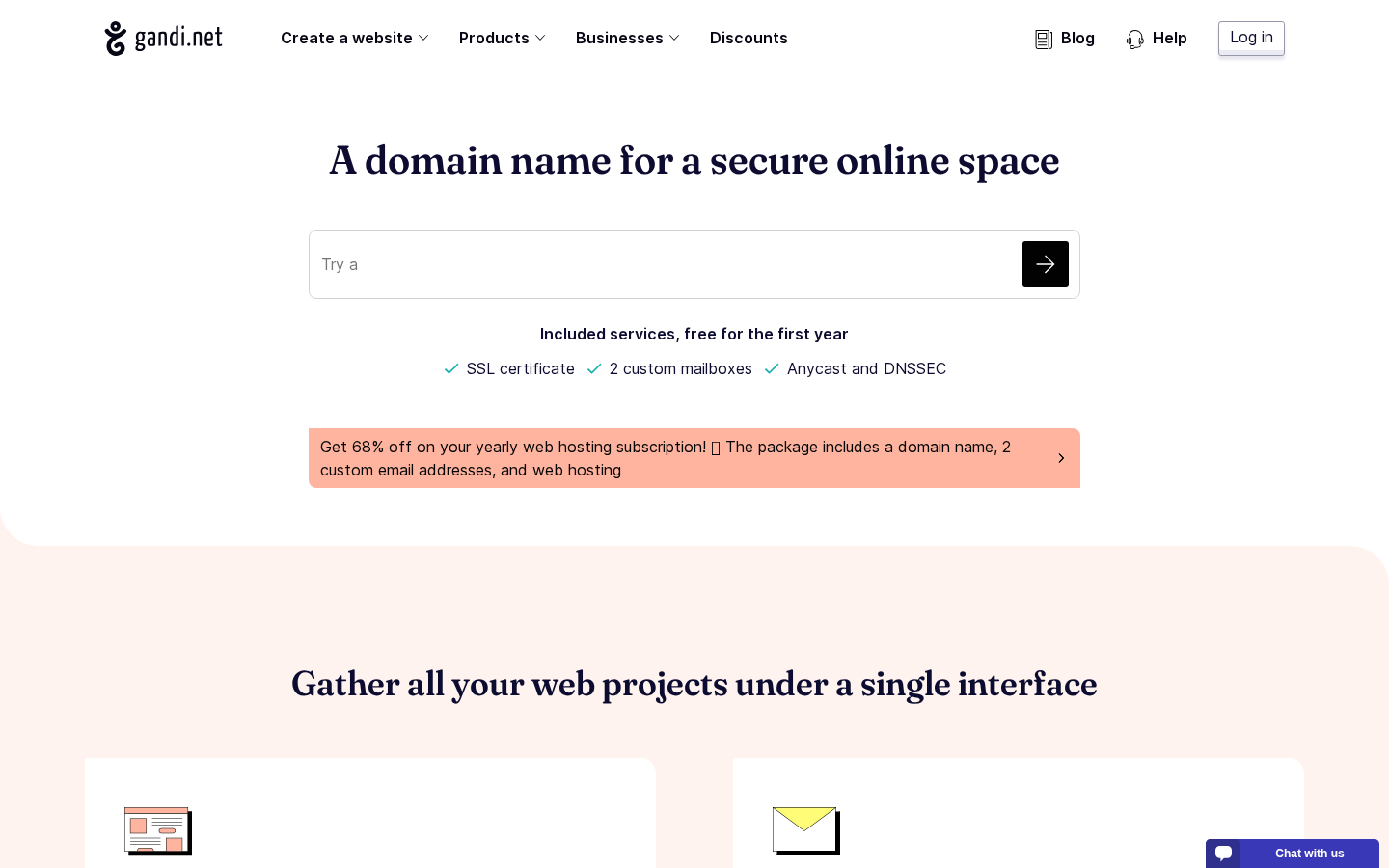
Gandi is the French registrar that built its reputation on a "no bullshit" approach long before transparency became a selling point. It carries a large catalog of TLDs, includes WHOIS privacy at no cost, and runs an interface designed to help you manage domains rather than push add-ons at every step.
Pricing isn't the cheapest in this list, and a round of increases a few years back annoyed some long-time users, but you always know what you're paying. For a French company processing your data under GDPR with a genuinely wide extension lineup, Gandi remains the default recommendation for most people who just want a solid, honest registrar.
OVHcloud: best for scale and low bulk pricing
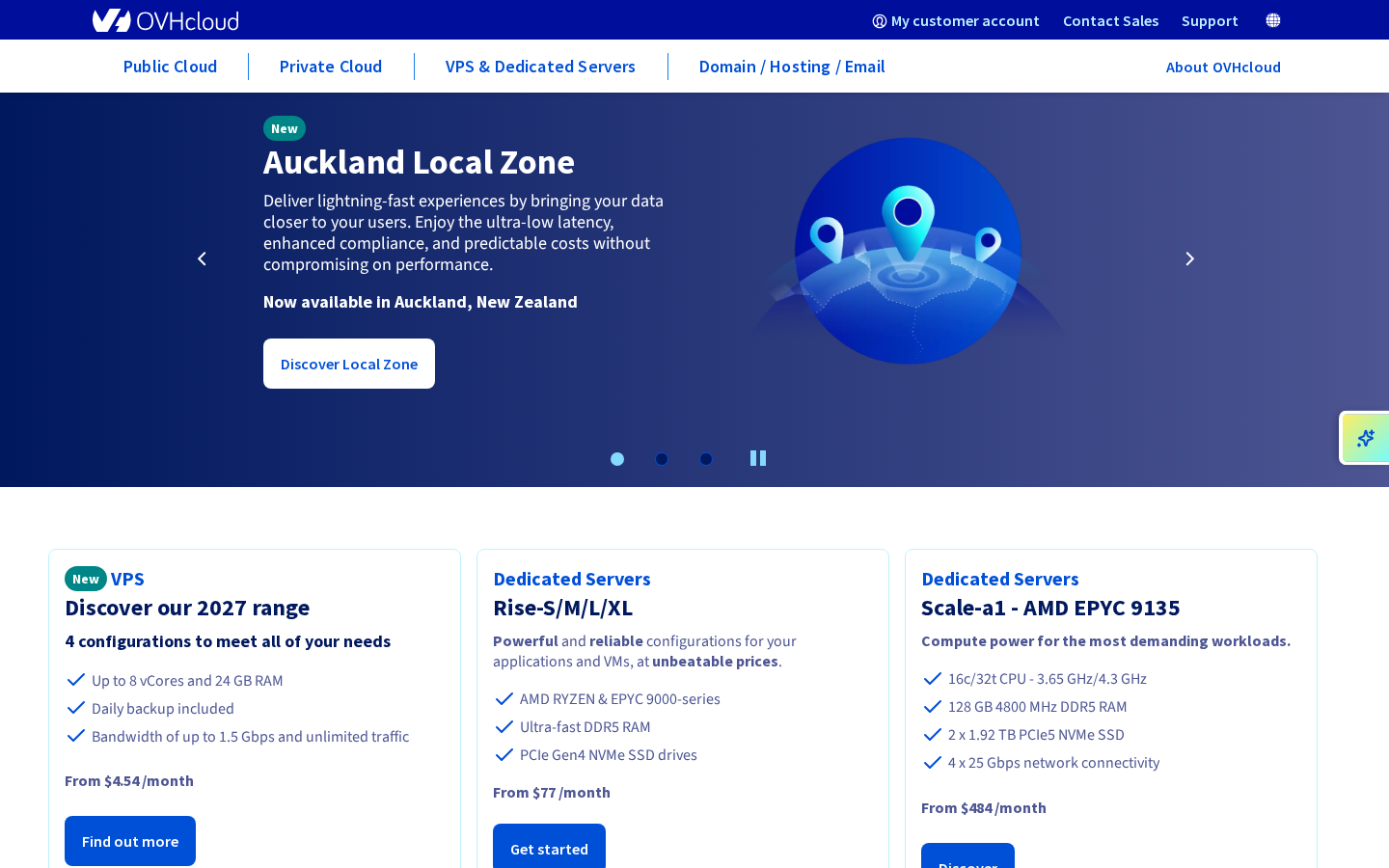
OVHcloud is Europe's largest cloud and hosting provider, and its domain pricing reflects that scale. If you're registering or managing a large portfolio, or you want domains, DNS, hosting, and cloud infrastructure under one French, GDPR-compliant roof, OVHcloud is hard to beat on cost.
The trade-off is polish. The platform is sprawling and the interface can feel more enterprise than friendly, so it suits teams comfortable navigating a larger control panel more than someone registering their first domain.
Infomaniak: best for privacy and sustainability
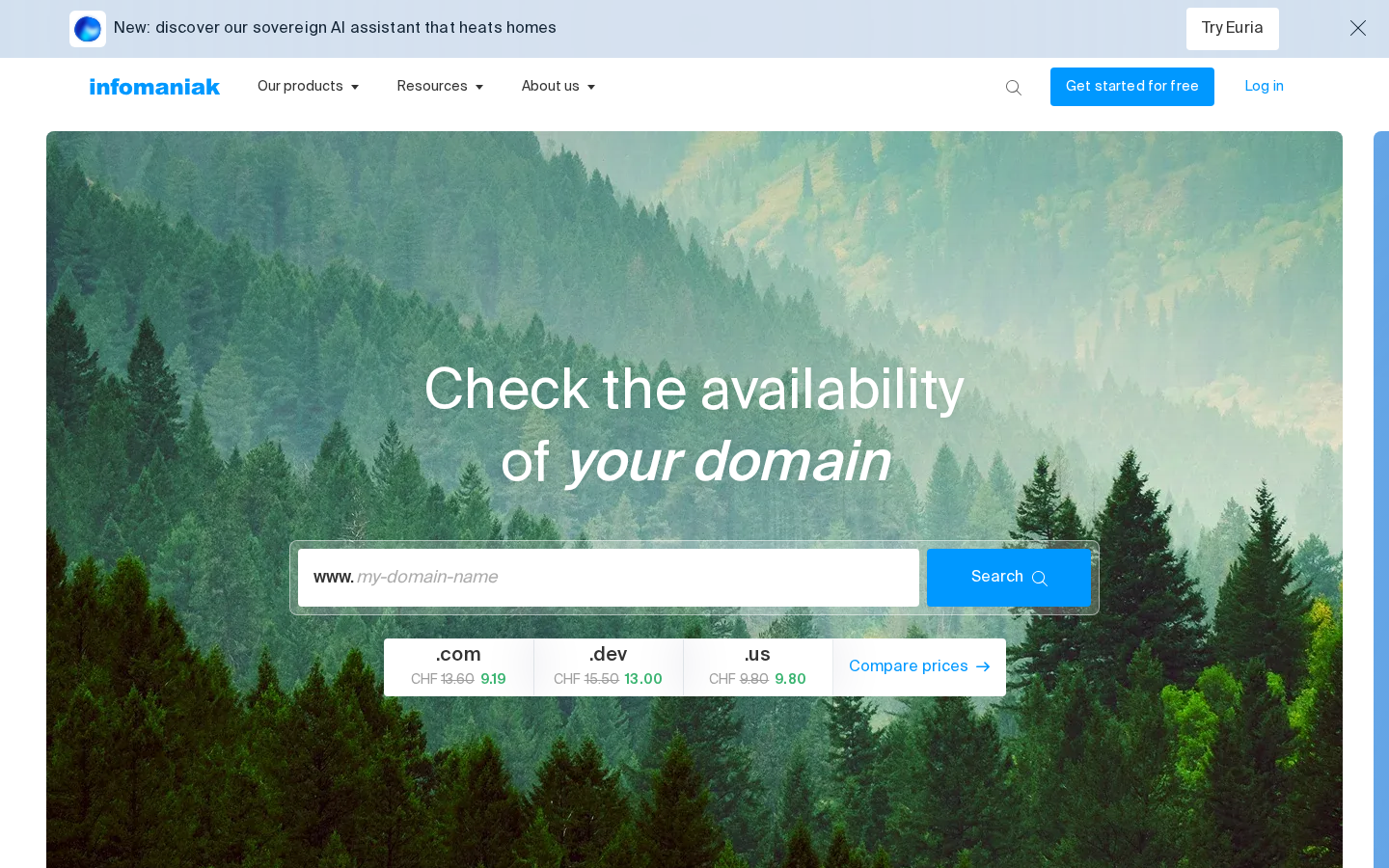
Infomaniak is the Swiss option, and it's the one to look at if data protection and environmental footprint both matter to you. Because it operates from Switzerland, your data benefits from some of the strictest privacy laws around while the company still meets the requirements for doing business across the EU.
It's also one of the more environmentally serious providers in this space, running on renewable energy and offsetting well beyond its own emissions. Service quality is consistently well regarded. If a Swiss jurisdiction and a clear sustainability record appeal to you, Infomaniak earns its place.
EuroDNS: best for European country-code domains
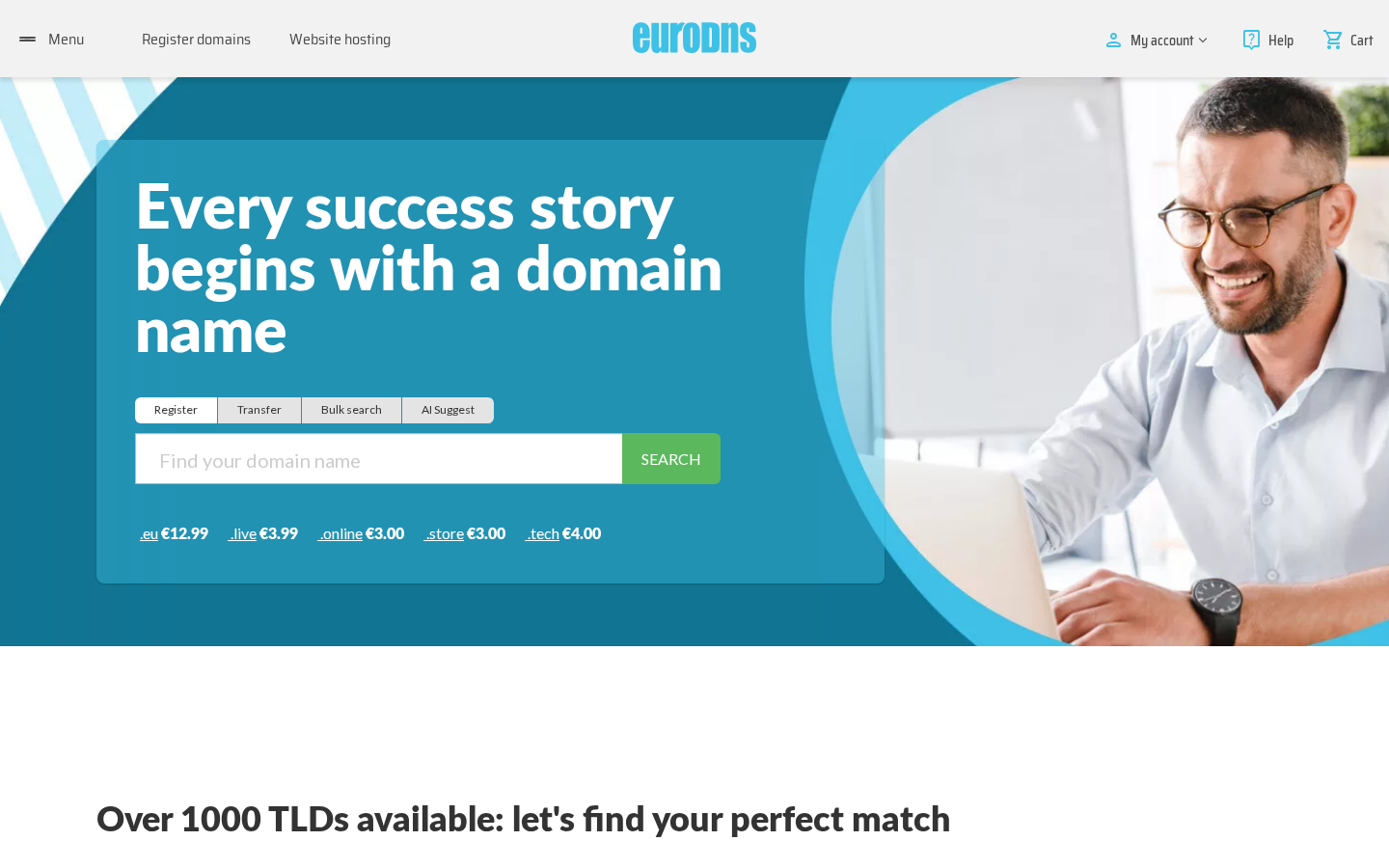
EuroDNS, based in Luxembourg, specializes in exactly what its name suggests. If you need European ccTLDs like .eu, .de, .fr, .nl, or .no, or you manage a portfolio of country-specific domains and want bulk tools and knowledgeable support during European business hours, this is the specialist pick.
It's less suited to people who mainly want cheap .com domains, where a budget registrar will undercut it, and WHOIS privacy isn't always free here. But for niche European extensions that the big US registrars don't even carry, EuroDNS does one job and does it well.
INWX: best for developers and resellers
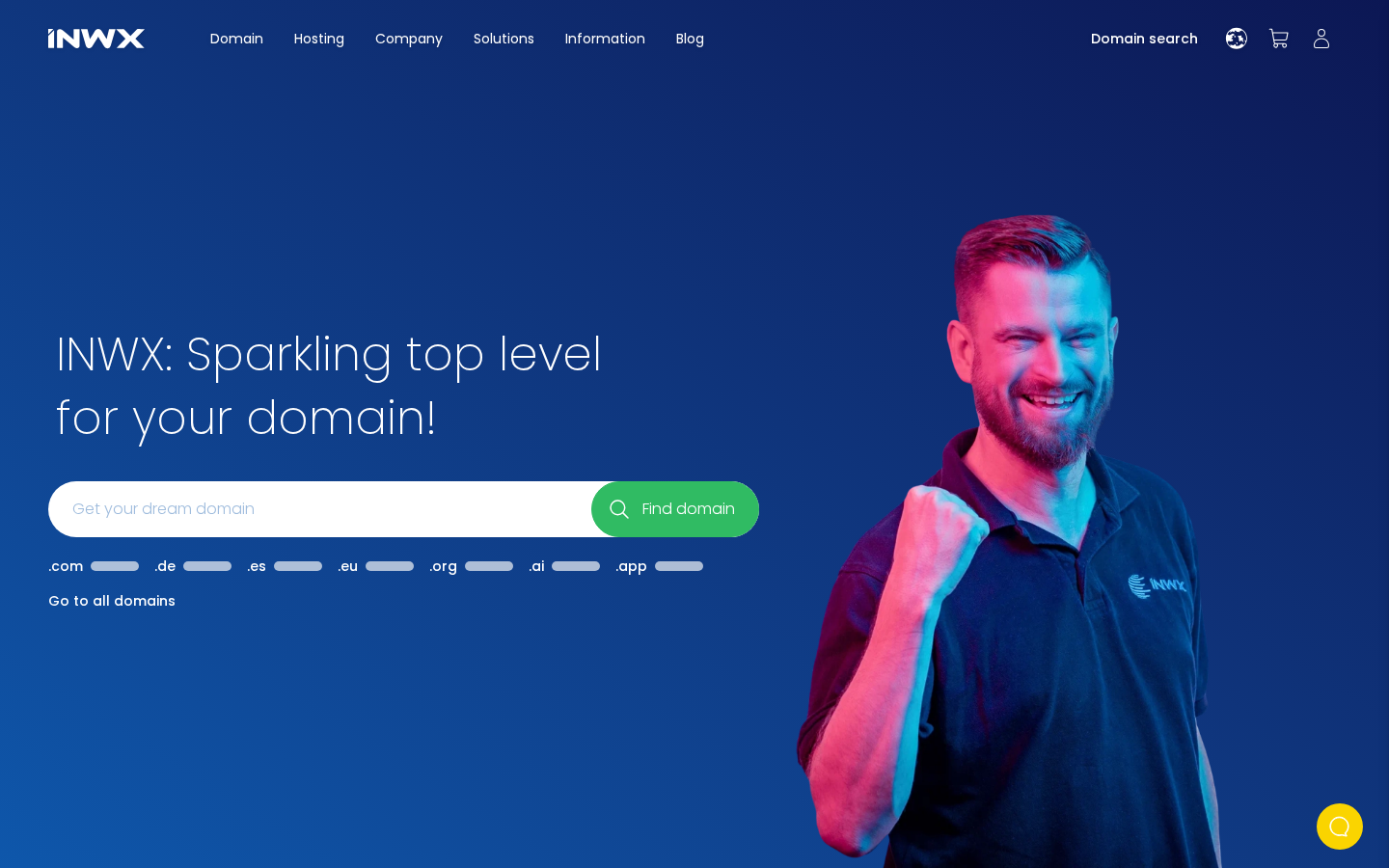
INWX is a German registrar popular with power users, agencies, and resellers. It supports a broad range of TLDs, offers competitive pricing, and is known for a capable API that makes automating registrations and DNS changes straightforward.
The interface is functional rather than flashy, which is the point. If you're managing domains programmatically or running them as part of a larger operation, INWX gives you the control and tooling to do it without fuss.
Honorable mentions
A couple of others are worth a look depending on your setup. Hetzner offers very competitive domain pricing alongside its well-known German hosting, which makes it convenient if your servers already live there.
Openprovider in the Netherlands runs a wholesale, membership-style model that's aimed at resellers managing domains at volume rather than individuals registering one or two.
How to move a domain to a European registrar
Switching is more routine than people expect, and it usually takes a few minutes of active work plus some waiting.
Start by unlocking the domain at your current registrar and requesting the authorization code, sometimes called an EPP or transfer code. Make sure WHOIS privacy isn't blocking the transfer confirmation email, and check that the domain isn't inside the 60-day lock that applies right after registration or a previous transfer.
Then start the transfer at your new registrar, enter the auth code, and approve the confirmation email when it arrives. The transfer typically completes within five to seven days, and most registrars add a year to your registration as part of the move, so you don't lose the time you'd already paid for. Point your DNS records before you switch if you want zero downtime.
So which European registrar is best?
There isn't a single winner, and any list that claims one is selling you something. Gandi is the safe all-rounder for transparent registration across a wide range of extensions. OVHcloud wins on scale and bulk cost. Infomaniak is the pick for Swiss-grade privacy and sustainability. EuroDNS owns the European country-code niche, and INWX is built for developers and resellers.
If your priority is keeping a domain in the same place as the server it points to, with flat pricing and privacy switched on by default, QDE registers .com, .net, and .org at €10.95 a year, renewal included, with free DNS management and no lock-in. It's a European provider operated from the Netherlands, with data handling aligned to EU privacy law and cryptocurrency among its payment options.
Thanks for reading! If you're also deciding where to host the site behind that domain, QDE runs high-performance KVM VPS in the Netherlands on pure NVMe storage with 10 Gbps uplinks, so you can register and deploy from one account.
Ready to register a domain or spin up a server? Contact our team and we'll help you find the right fit.
Frequently asked questions about European domain registrars
Why choose a European domain registrar over a US one?
A European registrar processes your account and registrant data under EU law, redacts your personal details from public WHOIS by default, and typically avoids the aggressive upselling and renewal price jumps common with the large American providers. For EU customers it also means support and billing aligned to your time zone and payment methods.
Are European registrars GDPR compliant?
EU-based registrars operate directly under the GDPR, which is why WHOIS privacy is automatic rather than a paid extra. Swiss registrars like Infomaniak fall under Switzerland's own strict data protection laws while still meeting EU requirements.
Can anyone register a .eu domain?
No. The .eu extension is restricted to residents and organizations in the EU, Iceland, Liechtenstein, or Norway. Most European registrars offer it, but you'll need to meet the residency requirement.
Does WHOIS privacy cost extra at European registrars?
Usually not. Under GDPR, EU registrars redact registrant personal data from public WHOIS, RDAP, and RDDS output by default, so it's included rather than sold separately. A few registrars still treat it as an add-on, so it's worth checking.
Which registrar is cheapest for .com domains?
Large-scale providers like OVHcloud tend to have the lowest bulk pricing, while flat-rate registrars like QDE keep registration and renewal at the same €10.95 so there's no second-year increase. The cheapest first-year price isn't always the cheapest over several years.
Can I transfer my existing domain to a European registrar?
Yes, as long as the domain is at least 60 days past its last registration or transfer and isn't locked. You'll unlock it, get the authorization code from your current registrar, and approve the transfer at the new one, which usually completes within a week and adds a year to your registration.
Can I register a domain without buying hosting?
Yes. Registrars sell domains as a standalone product, and you're free to point yours at any host or use your own nameservers. With a provider like QDE you can keep the domain and hosting together if you want, but it isn't required.